
The Imperative of Flame Retardant Textiles
Textiles are fundamental to modern life, forming the canvas of our homes, transportation systems, and protective apparel. However, the inherently high surface area and organic composition of natural and synthetic fibers render them highly susceptible to combustion. In the event of an ignition, untreated fabrics act as rapid accelerants, generating flashover conditions within minutes.
To mitigate this hazard, material scientists developed fire retardant treatments for fabrics—a highly specialized branch of chemical and physical engineering designed to disrupt the chemical process of burning. As regulatory compliance sharpens and consumer awareness elevates, understanding the functional paradigms of flame retardant (FR) textiles has shifted from a legal box-ticking exercise to a core design prerequisite. This article provides a comprehensive evaluation of how fire-retardant systems operate, their application across global industries, and the shifting dynamics driven by safety, environmental regulations, and technological breakthroughs.
The Underlying Science of Fire Retardancy
To understand how fire-retardant treatments for fabrics function, one must look at the classic combustion cycle. When a textile is exposed to an external heat source, it undergoes thermal degradation, or pyrolysis. This process breaks down solid polymer chains into volatile gases, carbonaceous char, and liquid tar. If volatile gases mix with atmospheric oxygen at temperatures above their ignition point, exothermic combustion occurs. This creates a self-sustaining feedback loop: the heat from the flame accelerates further pyrolysis, expanding the fire.
The Combustion Triangle Interruption:
Fire retardant chemistry works by attacking one or more legs of the combustion triangle (fuel, oxygen, and heat) through specific chemical or physical actions, effectively forcing the fire loop to collapse.
Chemical Mechanisms: Vapor and Condensed Phases:
- Vapor Phase (Gas Phase) Action: This approach intercepts the flame itself. When heated, certain FR chemical groups release highly reactive free radicals (often halogen or phosphorus-based species). These radical scavengers flood the gas zone, reacting with and neutralizing the high-energy hydroxyl and hydrogen radicals that drive the flame propagation. Without these radicals, the exothermic reaction stalls, and the fire self-extinguishes.
- Condensed Phase Action: This mechanism works directly on the solid substrate. The chemical catalyst alters the pyrolysis path of the textile fibers. Instead of allowing the thermal energy to convert cellulose or polymers into flammable volatiles, it accelerates a dehydration reaction that transforms the carbon backbone into a thick, non-combustible carbonaceous barrier known as char. This char layer acts as an insulation blanket, shielding underlying unburned fiber from both radiant heat and oxygen.
Physical Mechanisms: Cooling and Dilution:
Physical retardants achieve flame suppression without altering chemical structures. Mineral additives like alumina trihydrate undergo an endothermic dissociation when heated. This reaction absorbs massive quantities of thermal energy, physically cooling the surrounding fabric below its pyrolysis threshold. Concurrently, this dissociation releases water vapor, which dilutes the concentration of flammable gases and oxygen in the immediate vicinity of the flame.
Structural Categorization: Chemical Coatings vs. Inherent Fibers
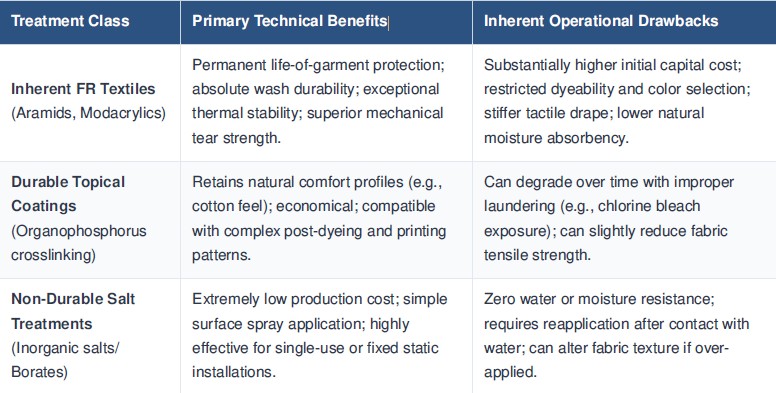
Engineers categorize fire retardant treatments for fabrics into two distinct types based on how they are built: topical chemical treatments and inherent, physically modified fibers.
Topical Chemical Treatments (Chemical Modification):
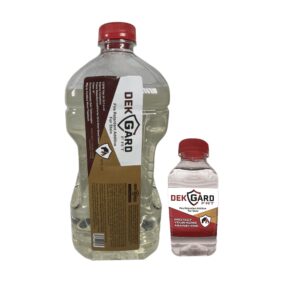
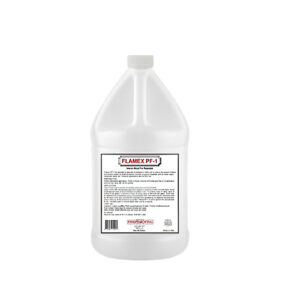
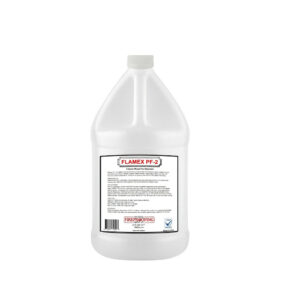
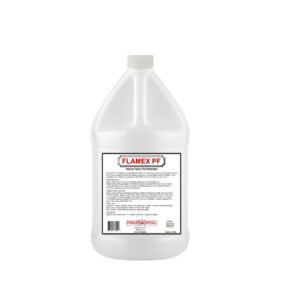
Topical fire-retardant treatments for fabrics involve applying chemical solutions to pre-existing textiles. This is usually executed through padding, exhaustion, back-coating, or spray applications. These coatings are split into two performance classes:
- Non-Durable Treatments: Generally consisting of water-soluble inorganic salts (such as ammonium polyphosphates or borates). These treatments offer cost-effective, high-yield fire protection but are highly susceptible to leaching. Laundering, heavy moisture, or atmospheric humidity will dissolve and extract the salts, stripping the textile of its protection.
- Durable Treatments: These utilize functional molecules that permanently bind to the fiber structure. For cellulosic fibers like cotton, organophosphorus compounds (such as cyclic phosphonates or tetrakis (hydroxymethyl)phosphonium salts) react covalently with the hydroxyl groups of the cellulose matrix. This creates a crosslinked chemical structure that withstands repeated heavy laundering cycles and mechanical wear without losing fire retardancy.
Inherent Flame Retardant Fibers (Physical Modification):
Inherent FR textiles are synthesized from fibers that are fundamentally flame resistant at the molecular level. Instead of a topical post-treatment, the flame-retarding properties are built directly into the raw polymer chain during synthesis or incorporated as an insoluble additive inside the polymer dope before extrusion.
Prominent examples include meta-aramids (Nomex), para-aramids (Kevlar), and modacrylic fibers. These molecules feature highly stable aromatic rings that resist thermal breakdown even at extreme temperatures, producing virtually zero flammable volatiles. Inherent fabrics retain their high performance throughout their entire life cycle, completely independent of laundering or mechanical friction.
Industrial and Commercial Applications
The selection of specific fire-retardant treatments for fabrics is strictly dictated by the unique environment and regulatory benchmarks of each industry sector.
Home Furnishings and Commercial Architecture:
In high-density architectural spaces and residential settings, interior textiles represent major fire propagation hazards. Draperies, acoustic wall panels, carpets, and upholstered furniture are governed by strict, localized fire codes, such as NFPA 701 in commercial architecture and BS 5852 (Crib 5) in hospitality environments. In these applications, topical back-coatings or cost-effective inherent polyester formulations are preferred, balancing aesthetics, drape feel, and mandatory smoke emission standards.
Personal Protective Equipment (PPE) and Duty Uniforms:
For industrial electricians, foundry workers, tactical military forces, and structural firefighters, FR fabrics are lifesaving personal shields. These garments must comply with demanding test metrics, including ASTM D6413 (vertical flame testing) and NFPA 2112 (flash fire protection). In these settings, inherent aramid blends dominate due to their structural integrity under direct flame. Durable topical cottons (like Proban or Westex UltraSoft) are also heavily utilized to provide comfortable, breathable, yet highly char-reactive alternatives for daily wear.
Transportation and Aviation Aesthetics:
The aerospace, automotive, and maritime sectors operate under exceptionally strict fire, smoke, and toxicity (FST) regulations, governed by authorities like the Federal Aviation Administration (FAA). Aircraft cabin seat covers, insulation blankets, and interior side-panels must meet vertical burn test standards while producing minimal toxic gas byproducts. Advanced wool-blend fabrics treated with specialized organophosphorus compounds or fluor product complexes are heavily favored here for their low weight and excellent natural char yield.
Environmental, Health, and Safety Considerations
The landscape of fire-retardant treatments for fabrics has undergone an unprecedented transformation due to toxicology and environmental safety regulations. Historically, polybrominated diphenyl ethers (PBDEs) and other halogenated organic treatments dominated the market due to their excellent vapor-phase efficiency. However, extensive environmental tracking revealed that these chemicals are persistent organic pollutants (POPs). They bioaccumulate in ecosystems and raise concerns regarding endocrine disruption and developmental toxicity.
Consequently, current global regulations—including the European Union’s REACH framework and the Stockholm Convention—have strictly banned or phased out traditional halogenated flame retardants. The industry has shifted significantly toward green chemistries, prioritizing halogen-free organophosphorus platforms, bio-based intumescent, and chemical systems that minimize toxic smoke and carbon monoxide generation during decomposition.
Strategic Conclusion
Fire retardant treatments for fabrics represent an evolving balance between life-safety engineering, comfort, and environmental responsibility. From heavy industrial aramid shields to durable eco-friendly topical finishes, selecting the right FR solution requires a deep understanding of combustion chemistry, application limits, and regional compliance frameworks. By keeping pace with green chemical developments and nanostructured technologies, textile manufacturers can deliver maximum flame protection while meeting the highest modern environmental standards.